How did we get here?
Money. Power. Dominance.

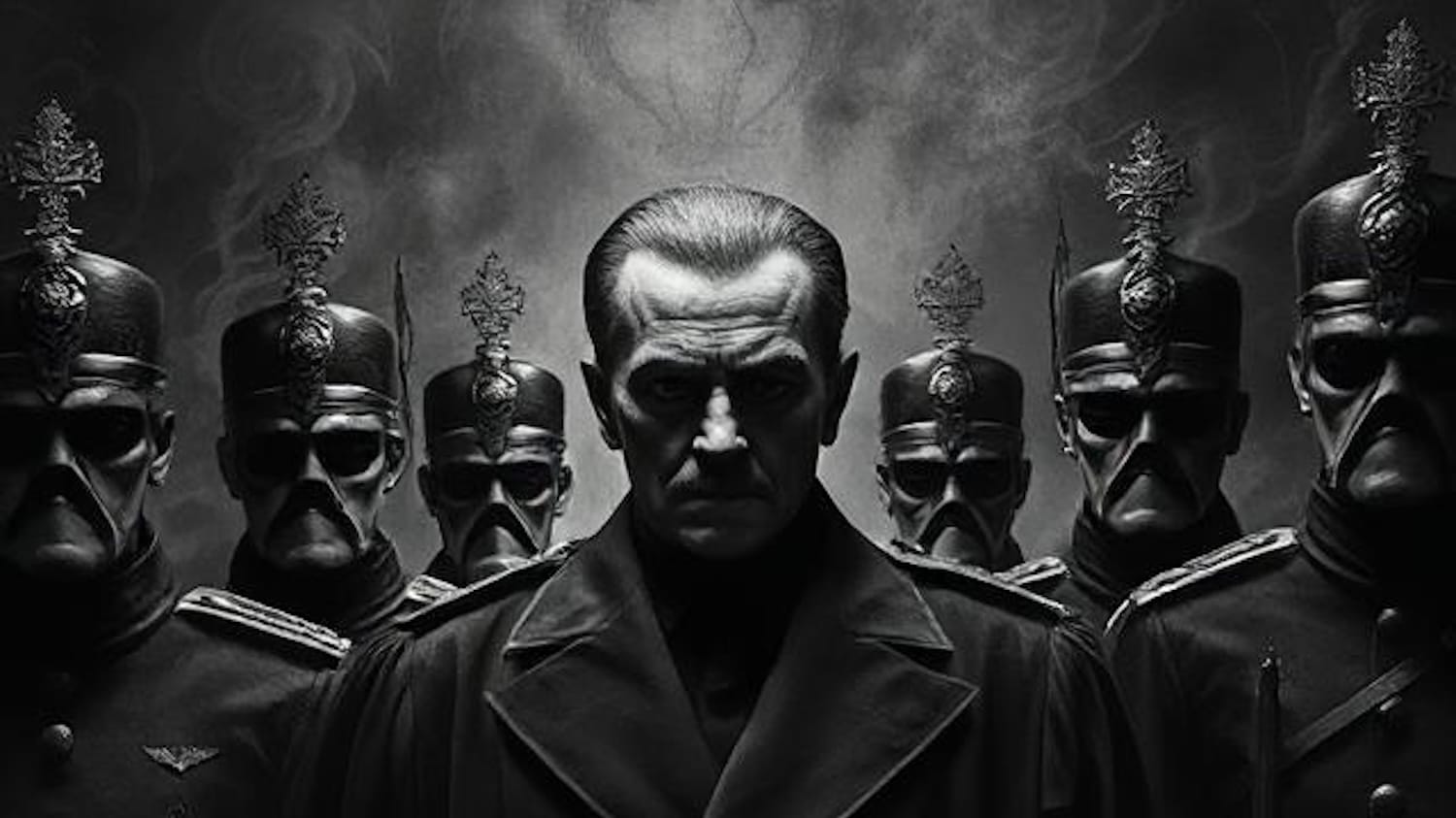
Where we are
We live on a beautiful planet with 8 billion beautiful people, the vast majority of whom want to live in peace, love their families and be fulfilled.
At the same time, we live on a planet where
- one good nuclear accident (let alone a deliberate act) could annihilate the human race
- leaders’ ambivalence to climate change imperils millions of lives, and
- where escalating conflict is a political constant.
How did we get here?
The Problem
The problem is the millennia-old Traditional Governance Model (TGM):
for the Powerless Many to obey
with Armed Enforcers ensuring compliance.

(There is always a disconnect between the Powerful Few and the Powerless Many else there would be no need for the Armed Enforcers.)
This is old energy: top-down, hierarchical, privilege for some, destitution for others.
The model is universal among
- political systems (monarchies, autocracies, plutocracies, oligarchies, theocracies, democracies)
- political philosophies (capitalist, communist, socialist, liberal, conservative, libertarian)
- international persuasions (nationalist, regionalist, globalist).
The energy dynamic is always the same:
- top down desire for money, power, control and domination
- the need for an enemy (and to appear strong) and
- creating fear of "the other" (for the security of the state of course).
Insecurity and fear everywhere.
On a global scale it looks like this:

The powerful few in a few powerful countries, aided by the weaponry available to the Armed Enforcers, are able to dominate 8 billion people. That's a powerful intoxicant if you are driven by power over others. And of course the fear is magnified - who isn't afraid of nuclear annihilation?
TGM and Change
The Traditional Governance Model needs a stable state. Thus it is well suited to where the Powerless Many are uneducated, cannot communicate easily and change takes place slowly. That's why it arose so long ago. As long as the monarch or dictator did not make life too hard for the peasants, or they became educated, the status quo was in equilibrium.
However, changing those parameters introduces tensions, to which the usual response is an increase in the strength of the Armed Enforcers (more personnel, increased surveillance, better weapons). If you are old enough, think "1984" or East Germany before the fall of the Berlin Wall.
The other response is that the peasants revolt - as in the American Revolution, the French Revolution, or the Russian Revolution. The peasants take over and introduce another version of the Traditional Governance Model. Old seats, new occupants.
Top-Down Democracy
In the 18th Century, the Americans and French tried something different, representative democracy, where the powerless many votes on who makes up the powerful few. Clearly this has advantages for them over a, say, monarchy with absolute power vested in one individual. However, it gives rise to the delusion that the powerless many are running the show.
Democracy introduces rules. You gain power by following electoral rules. This introduces new a new requirement to reach power - the ability to sell your message.

And, once you're in power, the rules determine what you can and can't do. In theory anyway.
The USA
The electoral rules in the USA prescribe the winner of the Electoral College takes it all, even though they might have less actual votes. They allow the President to choose the "powerful few" around him and enable many non-elected parties, even other countries, to have more say on the policies of the country than the electorate.
If you look the US today:

In 2024, $4.5 billion was spent in a long and nasty campaign. Donald Trump won the election with 32% of the vote. Kamala Harris won 31%. The 37% who chose not to vote for either candidate were the biggest voting bloc.
So at least ⅔ of American voters were dissatisfied with President Trump at his inauguration. Since then he has largely destroyed the rules of the Office by ignoring the Constitution and sidelining Congress.
Love him or loathe him, President Trump makes the drawbacks of the Traditional Governance Model in a Democracy very obvious.
And the urgent need to reinvent them.
The Paradox
Paradoxically, there is a movement to authoritarianism in many countries that have enjoyed democracy, including the USA. Why would educated and informed citizens want to give up their right to have their say in favour of an authoritarian state?
Maybe because the rules of representative democracy are not really democratic. They create DINOs - democracies in name only. Non-elected parties, such as major corporations and lobbyists have open access to the top levels of government. Citizens only have access once every two years (at best). If the motivation of the powerful few is money and power, which it is, there's no contest. See "Is America a DINO?
Yet another reason to reinvent the rules.
So what's next?
To say that the world is in political turmoil at the moment would be an understatement. Many people are saying democracy doesn't work.
That's not really true because of the DINO problem. Current democratic systems don't create real democracy. The Powerful Few still set the agenda; the Powerless Many are still relatively powerless.
What is needed is Citizen-led Democracy, where citizens set the agenda and politicians are charged with carrying it out, with transparency and accountability built in.
Citizen-led Democracy is the radical reinvention that is needed. The fear-inducing division between the Powerful Few and Powerless Many is eliminated.
It's the next evolution of democracy and it's Movement #2 for GenR.
Imagine
Next time you watch the news take a second to look at the levels of fear created by the Traditional Governance Model within a nation and between nations.
The "battle" metaphor is everywhere, indicating the fight for power, the need to appear strong and beat the enemy is primary. Anytime "fight" or "battle" or "war" is invoked, fear is at work.

Take a minute to imagine if fear is replaced by love, the need to appear strong is replaced by the need to be real and the need for control is replaced by the willingness to let people live their own lives. That's the energy of Citizen-led Democracy.
Not easy to do, is it? That's how entrenched the Traditional Governance model is.
One More Thing
The Powerful Few makes the rules for the Powerless Many to obey with Armed Enforcers ensuring compliance is such old energy.
So its appropriate this video is 40 years old - it's definitely old definition visuals! However, as we are seeing, the energy of the message is right up to date.
Trivia: the song was originally entitled "Everybody wants to go to war". Not as catchy, but still appropriate!
Are you ready for an alternative?
